Recent Publications
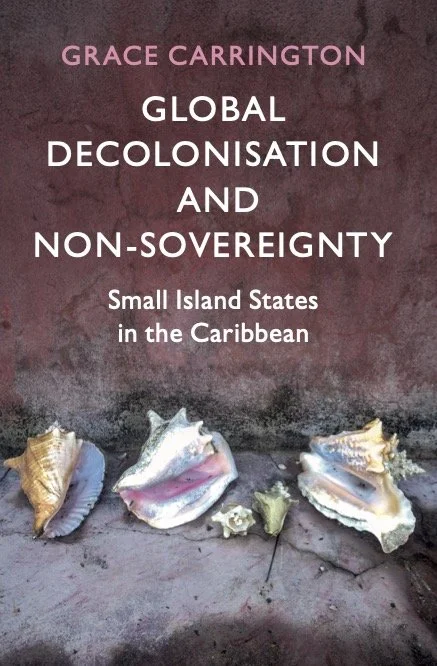
***Shortlisted for the Royal Historical Society First Book Prize 2026***
Non-sovereign territories today account for more than half the states in the Caribbean but regional and global histories of the twentieth century tend to exclude them from narratives of protest and change. This book argues that our current understanding of global decolonisation is partial. We need a fuller picture which includes both independent and non-independent states, and moves beyond a focus on political independence, instead conceptualising decolonisation as a process of challenging and dismantling colonial structures and legacies. Decolonisation is neither an inevitable nor a linear process, but one which can ebb and flow as the colonial grip is weakened and sometimes restrengthened, often in new forms. Using the Cayman Islands, the British Virgin Islands, Martinique and Guadeloupe as case studies, Grace Carrington demonstrates that a focus on the processes of decolonisation in these non-sovereign states enriches our understanding of the global experience of twentieth century decolonisation.
Global Decolonisation and Non-Sovereignty: Small Island States in the Caribbean
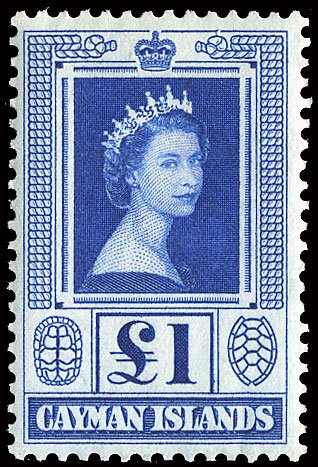
The Queen in the Cayman Islands : symbolic power and colonial continuities
This article examines the symbolic role of Queen Elizabeth II in local politics in the Cayman Islands, exploring the ways the monarchy was invoked to bolster a sense of loyalty to Britain, to maintain the colonial status quo and to legitimise the power of local elites. After the death of the Queen in 2022, historians have been reflecting on her legacy in countries across the Commonwealth. In British Overseas Territories like the Cayman Islands, where she remained Queen for the entirety of her reign, her death was more visibly commemorated than in many independent, formerly colonised nations where her legacy appeared more complicated and controversial. Nonetheless, a closer look at the symbolic power of the Queen reveals how, in the Cayman Islands, the British monarchy functioned to symbolically reinforce the colonial order rooted in White supremacy during the mid-twentieth century. This helped to maintain the political dominance of powerful merchant families and to stifle attempts at alternative leadership. Thus, the Queen was a symbol of continuity in the Cayman Islands, in more ways than one, facilitating ongoing colonial and racial inequalities.

The May 1967 massacre in Guadeloupe: Trauma, nationalism, and decolonization
On 26 May 1967, French police opened fire on striking workers in Pointe-à-Pitre, Guadeloupe, sparking a major uprising across the city. According to officials at the time, eight Guadeloupeans were killed during the unrest and many more were injured. However, a state cover-up means we may never know the true death toll. The French government blamed the violence on a clandestine independence movement (GONG) and tried nineteen activists before the French court of state security for threatening the territorial integrity of the French Republic. Fifty years later, the massacre has received little acknowledgement outside Guadeloupe. This paper will argue that a clearer understanding of the May 1967 massacre and its legacy demonstrates that Guadeloupe is not an anomaly, disconnected from twentieth-century decolonization. Instead, this event highlights the failures of nationalist movements in Guadeloupe and draws links to other struggles for self-determination in the Caribbean and Algeria, situating Guadeloupe within the wider narrative of global decolonization.